
High Pressure Oil And Gas Wells
Suitable operating pressure 35 ~ 70 MPa, lifting load 700 ~ 1600 kN. Standalone HPU and PLC, 3-stage well control of work, safety and emergency well pressure, configured with...
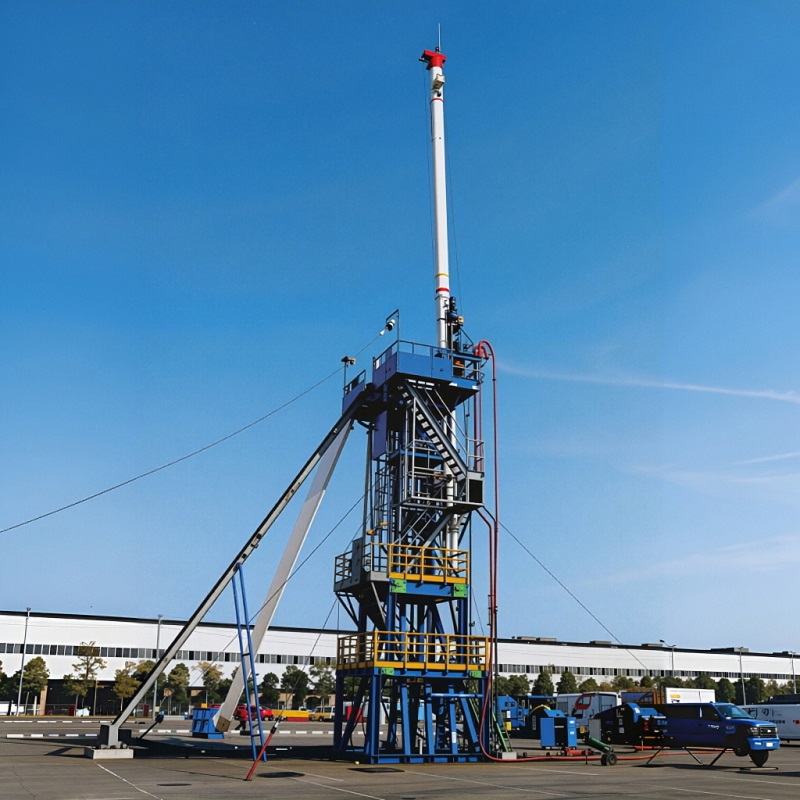
Product introduction
Suitable operating pressure 35 ~ 70 MPa, lifting load 700 ~ 1600 kN
Standalone HPU and PLC, 3-stage well control of work, safety and emergency well pressure, configured with double-protection of top anti-collision and tubular bending, CCTV and data acquisition system
Modular design, adapted to the complex well site transportation and installation
Key features
Short factual bullets extracted from the source text.
- Working pressure is the first shortlist filter.
- Lifting load and tubular size need to stay compatible with the well program.
- Remote or automated control can reduce handling friction.
- Unit should keep pressure control and intervention work in the same package.
- Suitable operating pressure 35 ~ 70 MPa, lifting load 700 ~ 1600 kN.
Application
Used for snubbing and well intervention work where pressure control is required
Product parameters
| Parameter | Unit | Value |
|---|---|---|
| Model | - | High Pressure Oil And Gas Wells |
| Series Code | - | Model dependent |
| Equipment Type | - | Snubbing unit |
| Mounting Type | - | Model dependent |
| Working Pressure | - | High-pressure well intervention |
| Lifting Capacity | - | Model dependent |
| Control Mode | - | Hydraulic control |
| Tubular Size | - | Model dependent |
| Safety System | - | Pressure control assembly |
| Application | - | Well intervention and snubbing service |
| Key Advantage | - | Keeps pressure control and lifting work in one package |
What buyers check before shortlist
Practical points that help compare this model family with the site condition and installation plan.
- High Pressure Oil And Gas Wells is usually compared on pressure class, bore size, and connection standard.
- Suitable operating pressure 35 ~ 70 MPa, lifting load 700 ~ 1600 kN.
- Standalone HPU and PLC, 3-stage well control of work, safety and emergency well pressure, configured with double-protection of top anti-collision and tubular bending, CCTV and data acquisition system.
How to read this model
A short buyer-oriented note for the models that otherwise read too thin.
High Pressure Oil And Gas Wells is a control-heavy rig package, so working pressure and lifting load have to stay aligned with the well condition.
Tubular size and control system are not side notes here; they decide whether the unit is actually usable on the target well.
If the site combines pressure and load constraints, the page should make that relationship obvious before the buyer asks for a quotation.
The pressure-control stack, hydraulic power unit, and safety sequence should be readable as one operating chain.
Buyers often want to see whether the unit is built for land work, offshore work, or both before they look at the final numbers.
Why this model matters
Extra buyer-facing context for the thinnest product pages.
High Pressure Oil And Gas Wells should be read as a pressure-control package first and a lifting package second.
Working pressure, tubular size, and control system need to line up or the unit will not stay practical on a real well.
If the site is offshore, deck space and lifting access should be checked before the buyer signs off.
The page becomes more useful when it explains how the well condition changes the choice of unit.
A snubbing page is easier to trust when it explains the pressure-control stack instead of only the frame and load numbers.
Remote or automated control matters most when the well gives the crew very little room to correct a mistake.
How buyers should read this model
A tighter reading guide for shorter product pages.
High Pressure Oil And Gas Wells should be checked as a pressure-control package first, because working pressure, lifting load, and tubular size have to stay aligned.
The hydraulic stack and control logic matter because snubbing work leaves very little room for trial and error on site.
If the project is offshore or space-limited, deck access and installation sequence should be part of the shortlist decision.
The buyer also needs to see whether the package is built for a simple land well or for a tighter offshore intervention sequence.
A short page note about the pressure-control path is often more useful than another broad claim about the frame itself.
A snubbing buyer usually also wants to know how the unit handles the transfer between well control and lifting work.
If the deck or pad is constrained, the rig-up path can be as important as the rated load.
The page should make it obvious whether the unit is meant to reduce handling steps or to support a heavier well-control package.
Related reading
Move from the model page to the guidance that explains the same buying family.
Snubbing Units
Back to the category guide
NewsCold-weather and desert rigs solve different problems
Climate adaptation is not cosmetic; it affects insulation, filtration, heating, and mobility choices.
FAQHow do I choose the right model?
Start from the working condition, target capacity, mounting type, and control preference. Then compare the category-specific fields on the product page before asking for a quotation.
Related products
Same category options and adjacent use cases.
Tell us the operating condition, target output, or installation constraint and we will point to the matching model.
Contact Us