
SYLQ2000 1050 Fracturing Skid
Offshore drilling, workover, cementing, and fracturing equipment designed for platform installation and marine conditions.
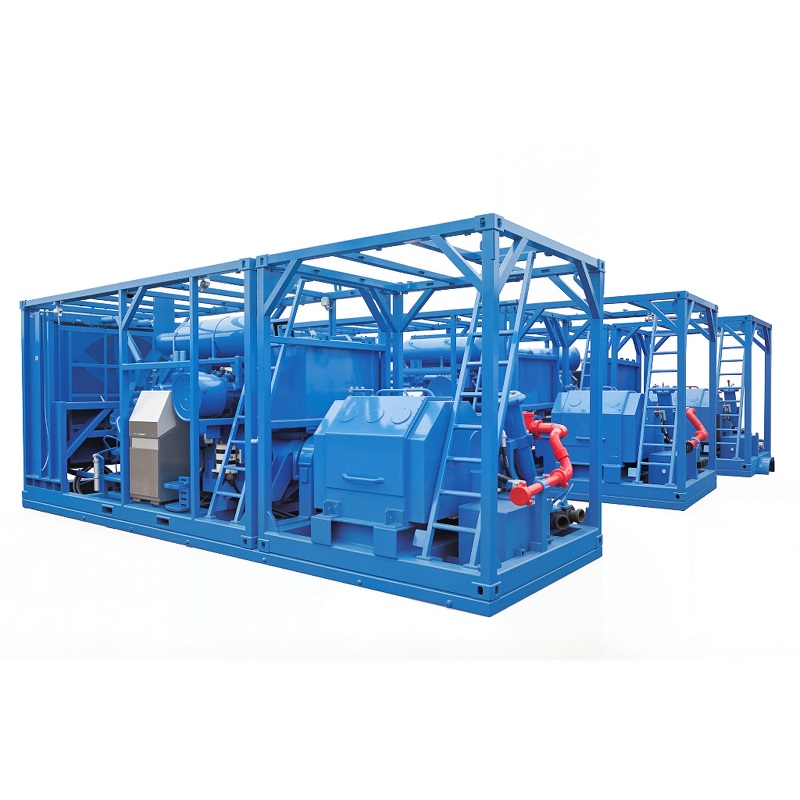
Product introduction
SYLQ2000 1050 Fracturing Skid belongs to the offshore equipment family and is intended for marine or platform installation.
Main decision points are platform compatibility, corrosion protection, module weight, and installation method.
Useful product page should explain how the package fits the marine constraint set, not just the component name.
Key features
Short factual bullets extracted from the source text.
- Platform compatibility should be stated clearly.
- Marine corrosion protection is a basic requirement.
- Module weight affects lifting and positioning.
- Installation method should match the offshore handling plan.
Application
Offshore fracturing sand prevention unit is used for high-density and low-density gravel sand prevention construction, pressure sand filling operations, acidification and fracturing operations in offshore oil operations. The equipment can meet the requirements of high pressure and large displacement during oil well sand prevention operations.
Product parameters
| Parameter | Unit | Value |
|---|---|---|
| Model | - | SYLQ2000 1050 Fracturing Skid |
| Series Code | - | 2000 |
| Equipment Type | - | Offshore equipment package |
| Mounting Type | - | Skid-mounted |
| Platform Compatibility | - | Offshore platform fit |
| Corrosion Protection | - | Marine anti-corrosion package |
| Explosion-proof Design | - | Model dependent |
| Module Weight | - | Model dependent |
| Installation Method | - | Lifting and deck positioning |
| Application | - | Offshore service and support |
| Key Advantage | - | Configured for marine installation and platform constraints |
What buyers check before shortlist
Practical points that help compare this model family with the site condition and installation plan.
- SYLQ2000 1050 Fracturing Skid needs lifting plan, tie-in work, and pad space checked together.
How to read this model
A short buyer-oriented note for the models that otherwise read too thin.
SYLQ2000 1050 Fracturing Skid is judged against deck space, lifting access, corrosion exposure, and the offshore installation path.
The buyer wants to know whether the module can be positioned safely without turning the deck plan into a handling problem.
Marine service pages work better when they explain the platform fit before they explain the component list.
Corrosion protection, enclosure choice, and installation order should be read together instead of as separate marketing lines.
For offshore drilling, cementing, or workover packages, crane capacity and footprint are usually the real deciders.
Why this model matters
Extra buyer-facing context for the thinnest product pages.
SYLQ2000 1050 Fracturing Skid is only useful when the platform can accept it without forcing extra rework into the deck plan.
Corrosion control, lifting access, and maintenance clearance should be read as one installation problem.
A buyer will care whether the equipment fits the platform before any optional feature becomes relevant.
For offshore pages, installation logic is part of the product, not a side note.
Offshore buyers usually want the first question answered fast: can the package fit the platform and be lifted safely.
A page that separates deck fit from the rest of the specification is easier to trust.
How buyers should read this model
A tighter reading guide for shorter product pages.
SYLQ2000 1050 Fracturing Skid should be checked against deck fit, crane access, and platform class before any optional feature is considered.
Corrosion protection and enclosure choice only matter if the installation path remains practical on the actual offshore site.
A good offshore page explains whether the module can be lifted, positioned, and maintained without breaking the deck plan.
The buyer usually wants to see whether the package is intended for fixed platform work, jack-up work, or a removable offshore module.
A clear deck plan matters because offshore equipment fails commercially when the lifting path or maintenance access is awkward.
The page should also say whether the package is sized for compact marine handling or for a more stable platform footprint.
A buyer on the offshore side will usually check access, lifting points, and corrosion strategy before reading the feature list.
If the equipment is part of a larger offshore spread, the page should show how the module fits that spread instead of standing alone.
Related reading
Move from the model page to the guidance that explains the same buying family.
Offshore Equipment
Back to the category guide
NewsOffshore equipment design factors buyers should inspect
Platform compatibility, anticorrosion treatment, and lifting module weight often decide offshore fit.
FAQHow do I choose the right model?
Start from the working condition, target capacity, mounting type, and control preference. Then compare the category-specific fields on the product page before asking for a quotation.
Related products
Same category options and adjacent use cases.
Tell us the operating condition, target output, or installation constraint and we will point to the matching model.
Contact Us