
SCF5000 Continuous Full Load Fracturing Pump
Pump families for mud circulation, plunger service, fracturing duty, and skid-mounted field deployment.
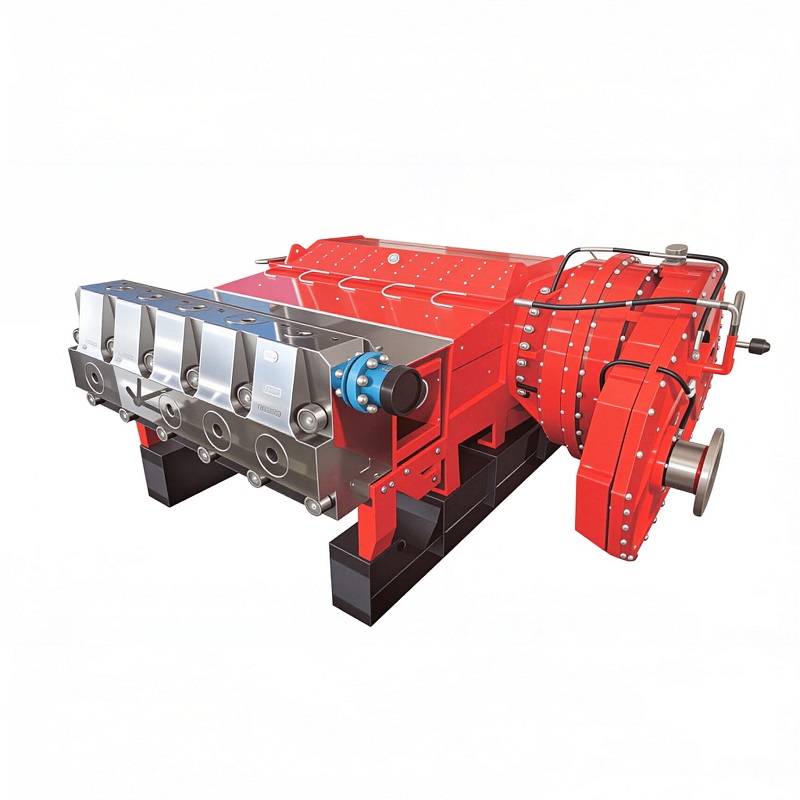
Product introduction
SCF5000 Continuous Full Load Fracturing Pump is a fracturing pump package intended for high-pressure delivery in field service work.
Pressure class, pump arrangement, drive system, and mounting style.
Useful page should help a buyer judge output and mobility together, not separately.
Key features
Short factual bullets extracted from the source text.
Application
SCF5000 continuous full load fracturing pump has the characteristics of super high power, long stroke, low stroke per minute, small discharge pulsation, good balance, for shale gas and well plant operation mode long-term continuous fracturing working conditions development, high-strength pump casing, oversized bearings, stainless steel pump fluid cylinder, strong overall rigidity, high power density, built-in temperature monitoring system, easy to detect and maintain, can achieve 7/24 hours continuous operation 100% power output, high-strength stainless steel pump fluid cylinder, service life of more than 2000h.
Product parameters
| Parameter | Unit | Value |
|---|---|---|
| Model | - | SCF5000 Continuous Full Load Fracturing Pump |
| Series Code | - | 5000 |
| Equipment Type | - | Fracturing pump |
| Mounting Type | - | Model dependent |
| Pump Arrangement | - | Series pump layout |
| Pressure Class | MPa | Model dependent |
| Drive System | - | Model dependent |
| Fluid End | - | High-pressure fluid end |
| Service Duty | - | Fracturing pumping |
| Application | - | High-pressure fracturing service |
| Key Advantage | - | Keeps pressure output aligned with field mobility |
| Service Note | - | Useful when the job must hold output across long pumping intervals. |
How to read this model
A short buyer-oriented note for the models that otherwise read too thin.
SCF5000 Continuous Full Load Fracturing Pump should be read together with the duty profile, because mud circulation, plunger service, and fracturing work do not ask for the same layout.
The pressure class and fluid-end design need to fit the intended service window before the rest of the package is compared.
A buyer usually wants the page to show what the pump is built to move and how the drive system affects the field rhythm.
Why this model matters
Extra buyer-facing context for the thinnest product pages.
SCF5000 Continuous Full Load Fracturing Pump covers several service types, so the page should make the intended duty obvious before the buyer compares numbers.
Mud circulation, plunger service, and fracturing duty do not place the same demands on the pump or fluid end.
If the unit is skid mounted, tie-in and maintenance access should be read together with pressure and displacement.
A practical buying page shows what is being pumped, how hard the unit runs, and how it is installed on site.
It should also say whether the pump is expected to work as a stand-alone machine or as part of a larger spread.
That is often the difference between a useful shortlist and a page that just repeats the model name.
How buyers should read this model
A tighter reading guide for shorter product pages.
SCF5000 Continuous Full Load Fracturing Pump should be compared by duty type first, because mud circulation, plunger service, and fracturing work place different demands on the pump.
Drive type and installation form decide whether the package is easier to relocate, service, or run continuously.
The buyer usually wants a clear answer on what the pump is supposed to move and how hard it is supposed to run.
A pump page should also tell the reader whether the fluid-end arrangement is intended for repeated field service or for a narrower operating window.
Maintenance access and replacement behavior matter because pump units are often chosen for how they support the rest of the spread.
When the model sits inside a larger spread, the buyer needs to know whether the pump is the primary output unit or part of a larger service chain.
The strongest page copy explains the duty profile in plain terms so the buyer can compare the pump against the actual job, not just the title.
A short note on fluid-end wear and service rhythm can be more useful than a broad claim about output alone.
If the pump will sit on a skid or truck, the page should make the maintenance path and installation path equally visible.
It also helps when the page says whether the unit is best treated as a core transfer machine or as a support pump in a larger field spread.
That distinction gives the buyer a better basis for comparing pump families that look similar at first glance.
A buyer can usually tell the difference between pump families faster when the page says what duty cycle the design is really built for.
The page should also make it obvious whether the pump is expected to live in a compact spread or in a larger service package.
That kind of wording helps the buyer compare operating role before getting distracted by model naming.
A compact pump page should still say whether the unit is built for long service intervals or quicker cycle work.
Buyers usually trust the page more when the installation path is described as clearly as the pump output itself.
The page should also show whether the pump is intended to stand alone or work as part of a more complex service train.
The pump buyer usually also checks whether the chosen layout reduces service interruption during regular field work.
If the page explains how the package supports pressure stability and maintenance rhythm, it reads closer to a real datasheet.
Related reading
Move from the model page to the guidance that explains the same buying family.
Pumping Unit
Back to the category guide
NewsElectric fracturing skids versus truck-mounted systems
A buyer-focused comparison of power source, mobility, and continuous working conditions.
FAQHow do I choose the right model?
Start from the working condition, target capacity, mounting type, and control preference. Then compare the category-specific fields on the product page before asking for a quotation.
Related products
Same category options and adjacent use cases.
Tell us the operating condition, target output, or installation constraint and we will point to the matching model.
Contact Us