
SZJ180TZ Trailer Drilling Rig
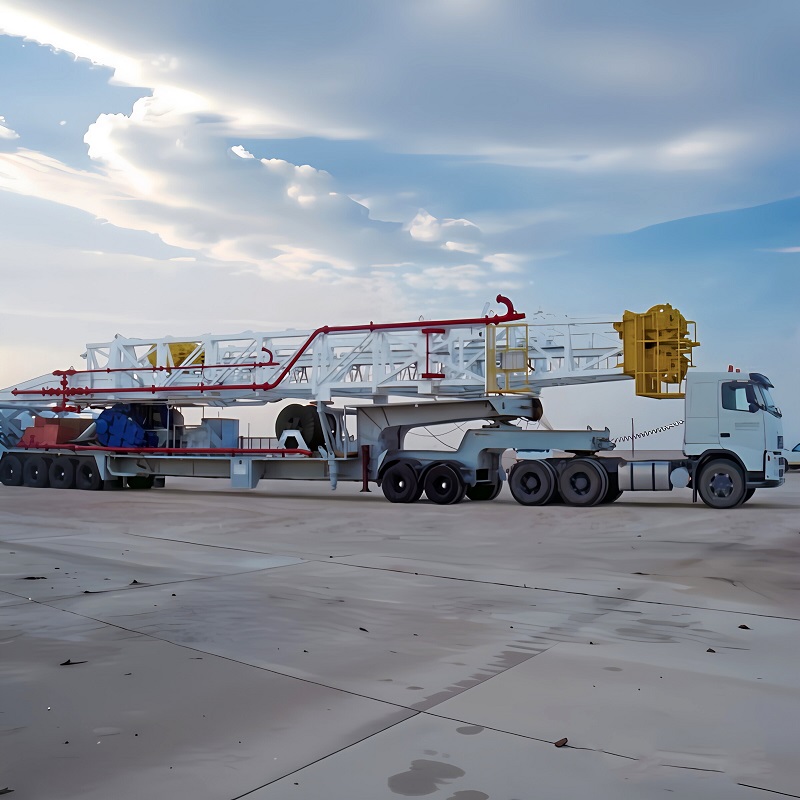
AC VFD drilling rig, the main rig and mast are moved in one traller,hydraulic raised-up and installation, substructure and unitized equipments are all placed on trailer for...
Product introduction
AC VFD drilling rig, the main rig and mast are moved in one traller,hydraulic raised-up and installation, substructure and unitized equipments are all placed on trailer for convenient movement
Key features
Short factual bullets extracted from the source text.
- SZJ180TZ Trailer Drilling Rig: Trailer layout supports towing-based relocation.
- Pad preparation should stay manageable between wells.
- Mast handling needs to remain safe and repeatable.
- Package should balance road movement and drilling duty.
- AC VFD drilling rig, the main rig and mast are moved in one traller,hydraulic raised-up and installation, substructure and unitized equipments are all placed on trailer for convenient movement.
Application
Used for drilling jobs that need towing-based relocation and compact site setup
Product parameters
| Parameter | Unit | Value |
|---|---|---|
| Model | - | SZJ180TZ Trailer Drilling Rig |
| Rig Type | - | Trailer-mounted drilling rig |
| Rated Drilling Depth | m | Model dependent |
| Mounting Type | - | Trailer-mounted |
| Mast Type | - | Model dependent |
| Drive System | - | Model dependent |
| Control System | - | Model dependent |
| Environmental Adaptation | - | Land operating package |
| Working Location | - | Onshore drilling operations |
| Deployment Type | - | Fast rig-up and relocation |
| Key Advantage | - | Designed for transport, setup, and site-fit efficiency |
What buyers check before shortlist
Practical points that help compare this model family with the site condition and installation plan.
- SZJ180TZ Trailer Drilling Rig needs towing arrangement, relocation speed, and preparation effort checked together.
- AC VFD drilling rig, the main rig and mast are moved in one traller,hydraulic raised-up and installation, substructure and unitized equipments are all placed on trailer for convenient movement.
How to read this model
A short buyer-oriented note for the models that otherwise read too thin.
SZJ180TZ Trailer Drilling Rig should be read together with depth class, mobility, and the rig-up sequence rather than as a stand-alone machine name.
When the model is built for desert, cold-weather, or cluster-well work, the real difference is how the package adapts to the site condition.
The buyer usually needs to know whether the rig can move, set up, and keep operating within the route and pad constraints.
Transport height, substructure style, and mast handling should not be hidden behind a generic model label.
A good rig page also tells the buyer whether the layout favors quick relocation or a heavier duty cycle on a stable pad.
How buyers should read this model
A tighter reading guide for shorter product pages.
SZJ180TZ Trailer Drilling Rig should be read together with depth class, mobility, and the rig-up sequence rather than as a stand-alone machine name.
When the model is built for desert, cold-weather, or cluster-well work, the real difference is how the package adapts to the site condition.
The buyer usually needs to know whether the rig can move, set up, and keep operating within the route and pad constraints.
A drilling page is easier to trust when it explains what the rig can handle on the road, on the pad, and under the intended well program.
Transport height, substructure style, and mast handling should not be hidden behind a generic model label.
A good rig page also tells the buyer whether the layout favors quick relocation or a heavier duty cycle on a stable pad.
If the site includes terrain or climate stress, the buyer should be able to see that adaptation in the wording immediately.
The page should also say whether the mast and substructure are built for a faster lift sequence or for a heavier transport package.
For many buyers, the important question is whether the rig logic reduces setup time without complicating maintenance access.
A useful drilling page makes the depth target, relocation path, and site adaptation visible in the same frame.
A drilling buyer also checks how the rig handles pad spacing, road permits, and mast movement during relocation.
If transport height is high, the page should make the movement constraint visible instead of burying it.
The most useful comparison is the one that keeps depth target, site adaptation, and setup time in the same frame.
That is what lets the buyer shortlist quickly without guessing at the operating envelope.
Related reading
Move from the model page to the guidance that explains the same buying family.
Drilling Equipment
Back to the category guide
NewsCold-weather and desert rigs solve different problems
Climate adaptation is not cosmetic; it affects insulation, filtration, heating, and mobility choices.
FAQHow do I choose the right model?
Start from the working condition, target capacity, mounting type, and control preference. Then compare the category-specific fields on the product page before asking for a quotation.
Related products
Same category options and adjacent use cases.
SZJ180TZ Trailer Mounted Drilling Rig
Top Pressure Drilling Rig
Substructure For ZJ90DB Double Lifting Drilling Rig
Tell us the operating condition, target output, or installation constraint and we will point to the matching model.
Contact Us