
SGJ600 Desert Cementing Truck
Desert cementing truck is a kind of cementing equipment suitable for desert driving and operation, which is designed to work in high temperature and sand environment.Operating...
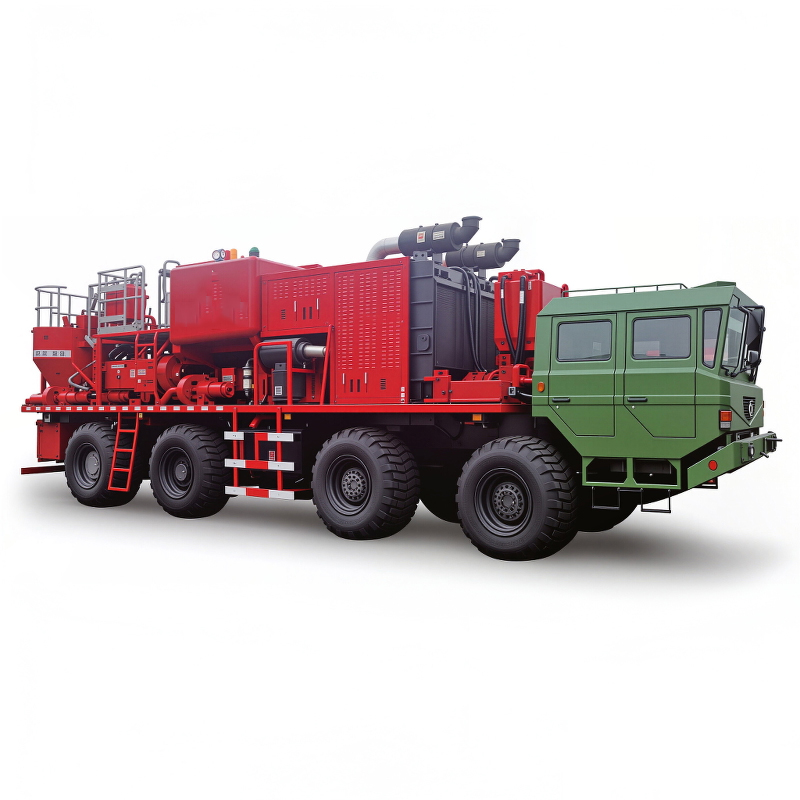
Product introduction
Desert cementing truck is a kind of cementing equipment suitable for desert driving and operation, which is designed to work in high temperature and sand environment.Operating temperature: -10°C ~
+55°C
Double crossarm double torsion bar independent suspension
Key features
Short factual bullets extracted from the source text.
- Wide section ultra-low pressure tires
- Circuit system interface partition and dust-proof connector design
- Adopt high intensity heat dissipation and high precision filtration device
Application
Used for desert land cementing jobs where transport, dust, and heat matter together. It suits dusty, high-temperature working conditions
Product parameters
| Parameter | Unit | Value |
|---|---|---|
| Model | - | SGJ600 Desert Cementing Truck |
| Equipment Type | - | Truck-mounted cementing unit |
| Pump Configuration | - | Model dependent |
| Pressure Class | MPa | Model dependent |
| Main Function | - | Cement slurry mixing and pumping |
| Control System | - | Model dependent |
| Power System | - | Large-horsepower diesel engine |
| Mobility | - | Truck-mounted |
| Working Condition | - | Land oilfield cementing service |
| Site Suitability | - | Desert field service |
| Deployment Type | - | Fast field deployment |
| Key Advantage | - | Improved transport efficiency and field operation efficiency |
What buyers check before shortlist
Practical points that help compare this model family with the site condition and installation plan.
- SGJ600 Desert Cementing Truck needs road mobility, service access, and deployment speed checked together.
- Desert cementing truck is a kind of cementing equipment suitable for desert driving and operation, which is designed to work in high temperature and sand environment.Operating temperature: -10°C ~
- +55°C.
How to read this model
A short buyer-oriented note for the models that otherwise read too thin.
SGJ600 Desert Cementing Truck should be read as a field cementing package where mounting style directly affects transport, rig-up, and pad access.
The buyer will usually compare pump count, displacement, pressure class, and how the unit moves between wellsites.
A short list is only useful when the job output and relocation pattern stay in balance on the same page.
Mixing, pumping, and handling need to be treated as one chain because a weak link changes the service rhythm quickly.
The mounting form also tells the buyer whether the unit is meant for a flexible land job or a more fixed route of repeated runs.
How buyers should read this model
A tighter reading guide for shorter product pages.
SGJ600 Desert Cementing Truck should be checked against the cementing spread, because pump count, displacement, and mixing layout work as one system.
Mounting type changes transport, rig-up, and pad access, so the buyer needs to compare the installation path as well as the output figure.
A useful page makes it clear whether the model is meant for land work, desert work, or offshore support.
The buyer also needs to know whether the unit is meant for single-job flexibility or repeated field runs with the same support crew.
Mixing, pumping, and tank layout should be judged together because one weak link changes the whole service rhythm.
A cementing buyer also wants to see whether the spread is built for quick lineup changes or for a steadier production rhythm on a fixed route.
The page should say whether bulk handling, liquid additive handling, and pump output stay in balance during the same job window.
If the unit uses a truck, trailer, or skid base, that choice affects not only transport but also how the crew sets up the site.
A short note on slurry control and line routing often helps more than another broad claim about power.
The buyer often compares how many support steps are needed between mixing and pumping, not only the nominal tank size.
If the route is long or dusty, the handling path and cleaning sequence can change the real operating cost.
A page is stronger when it shows whether the spread is meant for frequent changes or for a steadier fixed-route job.
That helps separate a true field package from a generic cementing label.
Related reading
Move from the model page to the guidance that explains the same buying family.
Cementing Equipment
Back to the category guide
NewsHow buyers compare cementing truck configurations
A practical checklist covering mounting type, pump count, displacement, pressure rating, and mixing layout.
FAQHow do I choose the right model?
Start from the working condition, target capacity, mounting type, and control preference. Then compare the category-specific fields on the product page before asking for a quotation.
Related products
Same category options and adjacent use cases.
Tell us the operating condition, target output, or installation constraint and we will point to the matching model.
Contact Us