
Plug Drill Pumping Skid
Coiled tubing units for intervention, plug-drill, pumping support, and compact field deployment.
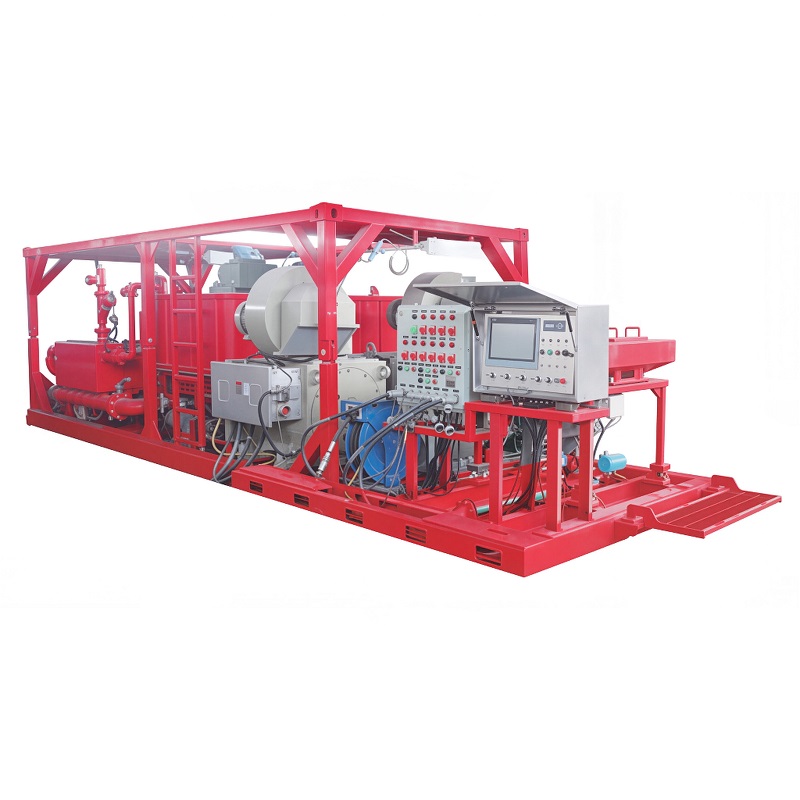
Product introduction
Plug Drill Pumping Skid is a plug-drill support package used when intervention work needs pumping and deployment in the same unit.
Buyer will usually compare the pump arrangement, mounting form, and how the package fits the plug-drill workflow.
Useful page should explain the support role instead of treating the unit as a generic pump skid.
Key features
Short factual bullets extracted from the source text.
- Pump layout should suit plug-drill support work.
- Mounting type affects relocation and pad use.
- Package should stay easy to tie into the service chain.
- Unit needs to support compact field deployment.
Application
The equipment is integrated with both mixing and pumping functions, to realize the function of pumping-while-mixing. The skid-mounted electric plug-drill pumping unit is of double engine double pump, using the grid power as the power source, low noise, low energy consumption, low carbon, low emission, environmental protection and energy saving. It has solved the wasted power caused by the joint operation of two fracturing pump trucks with mixing equipment in the domestic plug-drill service.
Product Parameters
| Model | SZB1000 electric plug - drill pumping skid | pumping truck SZB1000 plug - drill |
|---|---|---|
| Model, plunger pump | STP1000× 2 | STP1000× 2 |
| Max. W.P. | 64MPa | 64MPa |
| Max. displacement, single pump | 1500L/min | 1500L/min |
| Liquid mixing type | Solid+Liquid Liquid+Liquid, | Solid+Liquid Liquid+Liquid, |
| Additives | ≥2 | ≥2 |
| Continuous working hours | >8h | >8h |
What buyers check before shortlist
Practical points that help compare this model family with the site condition and installation plan.
- Plug Drill Pumping Skid needs lifting plan, tie-in work, and pad space checked together.
How to read this model
A short buyer-oriented note for the models that otherwise read too thin.
Plug Drill Pumping Skid has to balance injector handling, reel layout, and tubing size before the buyer worries about optional features.
Compact installation matters because the unit must fit the site without making the service sequence difficult to follow.
If the job mixes intervention and pumping support, the control layout should keep the workflow easy to reset between runs.
The maintenance points, hose routing, and cabin access should still be practical after the unit is installed.
A buyer usually wants to know whether the package is built for faster rig-up or for tighter deck and pad conditions.
Why this model matters
Extra buyer-facing context for the thinnest product pages.
Plug Drill Pumping Skid also matters because the unit has to fit intervention work without taking over the whole wellsite.
The buyer should compare injector pull force, reel size, and tubing diameter before looking at smaller options.
If the unit is used offshore or in tight pads, module weight and lift points become part of the buying decision.
A page for this family is more useful when it separates transport fit from job capacity.
The same family name can hide very different reel and injector choices, so the duty split should be clear.
Rig-up speed is part of the real cost, especially when the well window is short and the crew has to move quickly.
How buyers should read this model
A tighter reading guide for shorter product pages.
Plug Drill Pumping Skid should be checked on injector pull force, reel capacity, and tubing diameter before the buyer focuses on the transport package.
Compact installation matters, but only if the control layout still allows the crew to work cleanly during intervention jobs.
A practical page makes the trade-off between reel handling and site fit obvious instead of hiding it behind one broad model name.
The buyer usually wants to know how quickly the unit can move from transport to working position without making the deck or pad crowded.
Injector, reel, and cabin layout should be read as one working chain rather than three isolated features.
A unit that saves floor space but slows rig-up can still be the wrong answer for a short intervention window.
Buyers usually compare the practical handling sequence before they compare any secondary feature in the brochure.
The page should make it easy to see whether the unit is built for frequent moves or for more stable field placement.
A compact package is only useful when the crew can still handle tubing safely and reset the system without delay.
The buyer usually also checks whether the injector and reel package stays practical for the planned well count and service rhythm.
If the page explains the intervention flow in a straight line, it becomes easier to compare against alternate units.
Related reading
Move from the model page to the guidance that explains the same buying family.
Coiled Tubing Units
Back to the category guide
NewsWhat matters most in a coiled tubing unit selection
Pull force, reel capacity, injector layout, and installation speed usually decide the final model.
FAQHow do I choose the right model?
Start from the working condition, target capacity, mounting type, and control preference. Then compare the category-specific fields on the product page before asking for a quotation.
Related products
Same category options and adjacent use cases.
SKB70 Air Compressor Pumping Truck
Skid Mounted Coiled Tubing Unit
Multi Function Heavy Duty Spooling Device
Tell us the operating condition, target output, or installation constraint and we will point to the matching model.
Contact Us