
Lubricators
High pressure manifolds, wellhead devices, lubricators, testing manifolds, and fluid control elements for demanding field use.
Product introduction
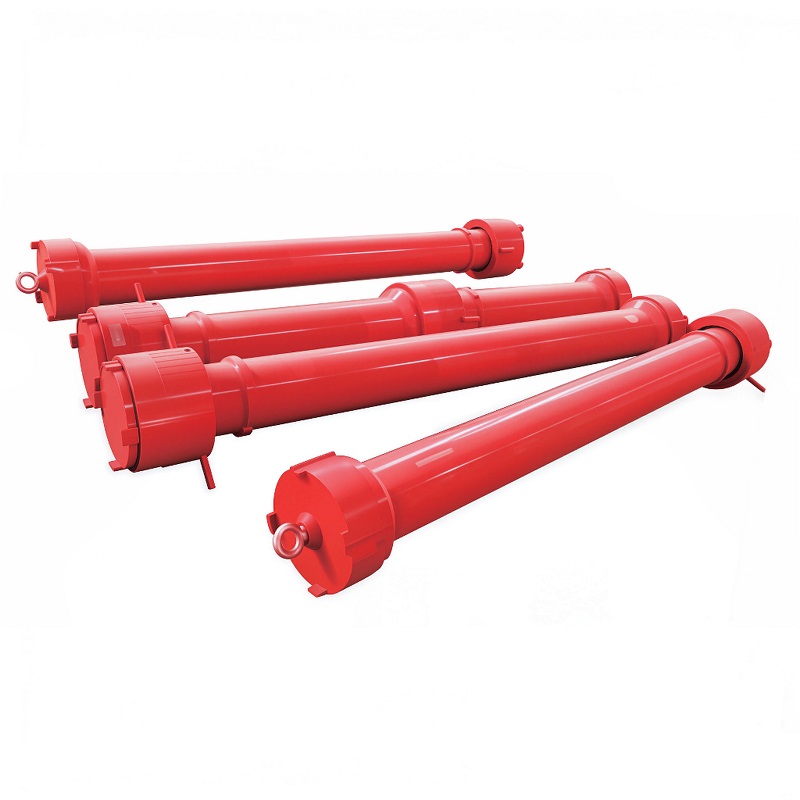
Lubricators is a pressure-control accessory used to keep intervention access sealed under working pressure.
Shortlist depends on pressure class, bore size, connection style, and how the sealing arrangement is built.
Buyers, the point is controlled access rather than a generic pipe assembly.
Key features
Short factual bullets extracted from the source text.
- Pressure sealing should stay reliable through the intervention window.
- Bore size needs to fit the service string.
- Connection style should match the rest of the wellhead chain.
- Assembly needs to support controlled access under pressure.
Application
A lubricator is a straight pipe with special interface form at both ends,installed between a stripper and the BOPs for CTU operations, used to seal the downhole pressure when lifting and lowering the downhole tool string.
Product Parameters
| Rated working pressure | 105/70MPa |
|---|---|
| Nominal bore | 3 - 1/16",4 - 1/16", 5 - 1/8 |
| Commoninterfaces | CB34,CB44,CB46,CB54,CB56 |
| Material grades | DD,EE |
What buyers check before shortlist
Practical points that help compare this model family with the site condition and installation plan.
- Lubricators is usually compared on pressure class, bore size, and connection standard.
How to read this model
A short buyer-oriented note for the models that otherwise read too thin.
Lubricators should keep the main operating condition visible, because buyers need to see how the model fits the site before they compare numbers.
The parameter table or source image should be read together with the application section, not as a standalone block.
A good product page tells the buyer what problem the unit solves, what it must fit, and which limits matter most.
How buyers should read this model
A tighter reading guide for shorter product pages.
Lubricators should be read as a pressure-control assembly, so bore size, connection type, and control mode need to stay in the same frame.
The key question is whether the package fits the manifold or wellhead system without forcing rework on the field layout.
The buyer also needs a clear view of the service medium and pressure class before comparing similar products.
A good page also explains whether the assembly is intended for switching, isolation, testing, or high-pressure routing work.
Connection standards and control logic matter because they determine how easily the unit fits the rest of the spread.
For a buyer, the most useful check is whether the assembly can connect to the existing line plan without changing the field sequence.
A short note about how the valve or manifold behaves under repeated pressure cycles is often more useful than a broad sales claim.
If the line has remote control or quick plug-in features, the page should make the operating sequence obvious rather than just naming the hardware.
A pressure-control buyer also wants to see whether maintenance access and line marking stay practical after installation.
The page should leave no doubt about which standard the connection follows, because that usually decides compatibility first.
High-pressure routing is easier to trust when the page explains both flow direction and isolation logic in plain terms.
Repeated switching, pressure cycling, and line reconfiguration are the details that separate a usable field assembly from a generic manifold photo.
Related reading
Move from the model page to the guidance that explains the same buying family.
High Pressure Fluid Control Products
Back to the category guide
NewsWhy high-pressure manifolds need clear control logic
Remote control, local control, and interlock design reduce risk during high-pressure operations.
FAQHow do I choose the right model?
Start from the working condition, target capacity, mounting type, and control preference. Then compare the category-specific fields on the product page before asking for a quotation.
Related products
Same category options and adjacent use cases.
Tell us the operating condition, target output, or installation constraint and we will point to the matching model.
Contact Us