
Desert Workover Rig
Off-road desert chassis, internal wind load guyline, good adaptability to high temperatures (55°C) in deserts.
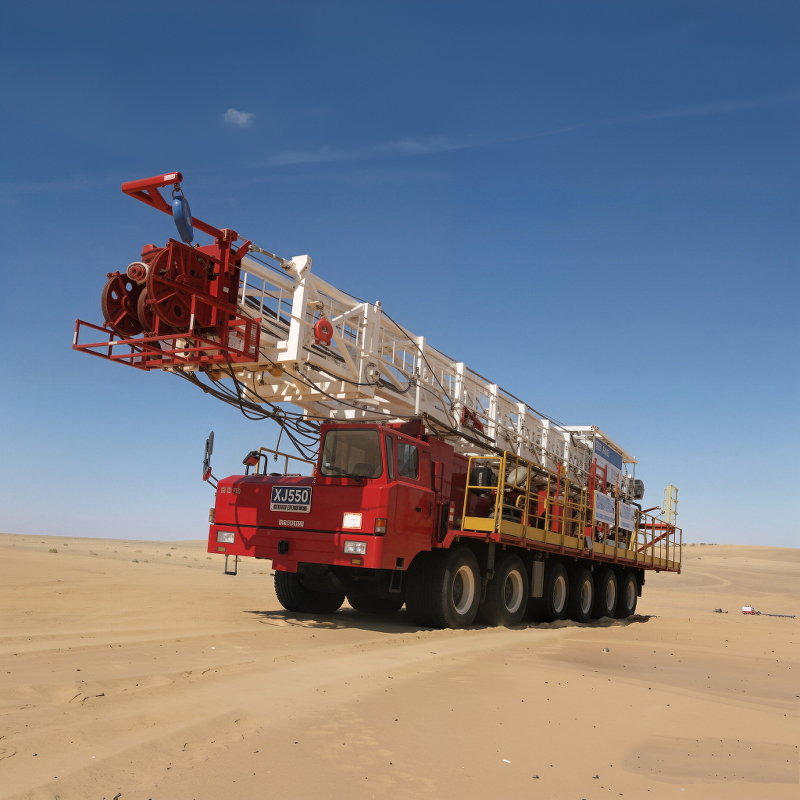
Product introduction
Sand control measures: heavy-duty air filter and special painting process for deserts
Desert Workover Rig is adapted for hot, dusty field conditions where road movement and service access both matter.
Cooling, filtration, relocation behavior, and whether the package can stay serviceable in a harsh desert environment.
Desert adaptation is about keeping the rig workable after repeated moves and long operating days.
Key features
Short factual bullets extracted from the source text.
- Cooling and filtration need to support dusty field conditions.
- Rig should remain practical on rough transport routes.
- Service access matters because the environment stresses the equipment.
- Package should stay easy to move and re-set between wells.
- Sand control measures: heavy-duty air filter and special painting process for deserts.
Application
Used for workover operations in hot, dusty operating regions. It suits dusty, high-temperature working conditions
Product parameters
| Parameter | Unit | Value |
|---|---|---|
| Model | - | Desert Workover Rig |
| Rig Type | - | Workover rig |
| Mounting Type | - | Model dependent |
| Mast Type | - | Model dependent |
| Drive System | - | Model dependent |
| Mobility | - | Model dependent |
| Working Condition | - | Desert field operations |
| Application | - | Well servicing and workover operations |
| Deployment Type | - | Field mobile installation |
| Key Advantage | - | Matched to relocation, mast handling, and field adaptation requirements |
What buyers check before shortlist
Practical points that help compare this model family with the site condition and installation plan.
- Desert Workover Rig should be checked for mobility, drive system, and field setup time.
- Off-road desert chassis, internal wind load guyline, good adaptability to high temperatures (55°C) in deserts.
- Sand control measures: heavy-duty air filter and special painting process for deserts.
How to read this model
A short buyer-oriented note for the models that otherwise read too thin.
Desert Workover Rig should be compared on hook load, mobility, and drive system before the buyer worries about model suffixes.
Cold-weather, desert, mountain, and battery storage versions solve different operating problems, so the site condition must stay visible.
The buyer usually wants to know whether the rig can move, set up, and handle the target well program without excessive support work.
A workover page is more helpful when it says how the rig handles relocation, mast work, and the day-to-day service cycle.
The page should also tell the buyer whether the unit is meant for a stable pad or for repeated route movement.
How buyers should read this model
A tighter reading guide for shorter product pages.
Desert Workover Rig should be compared on hook load, mobility, and drive system before the buyer worries about model suffixes.
Cold-weather, desert, mountain, and battery storage versions solve different operating problems, so the site condition must stay visible.
The buyer usually wants to know whether the rig can move, set up, and handle the target well program without excessive support work.
A workover page is more helpful when it says how the rig handles relocation, mast work, and the day-to-day service cycle.
The practical question is whether the rig can stay productive on the route and pad arrangement the project actually uses.
The page should also show whether the rig favors fast movement, lower fuel reliance, or a more stable service rhythm.
A buyer can usually rule out a rig faster when the climate adaptation or terrain handling is stated plainly.
If the rig is built for a special route or well program, that context should be visible before the feature list starts.
A workover page also needs to show whether the package is optimized for quick intervention or for repeated service cycles.
If the model is a special fuel or automation version, the buyer should see the trade-off with service access and operating rhythm immediately.
Route movement, pad staging, and maintenance access are the practical deciders on many workover projects.
The best comparison is the one that keeps those factors visible alongside hook load and drive system.
Related reading
Move from the model page to the guidance that explains the same buying family.
Workover Rigs
Back to the category guide
NewsCold-weather and desert rigs solve different problems
Climate adaptation is not cosmetic; it affects insulation, filtration, heating, and mobility choices.
FAQHow do I choose the right model?
Start from the working condition, target capacity, mounting type, and control preference. Then compare the category-specific fields on the product page before asking for a quotation.
Related products
Same category options and adjacent use cases.
Tell us the operating condition, target output, or installation constraint and we will point to the matching model.
Contact Us